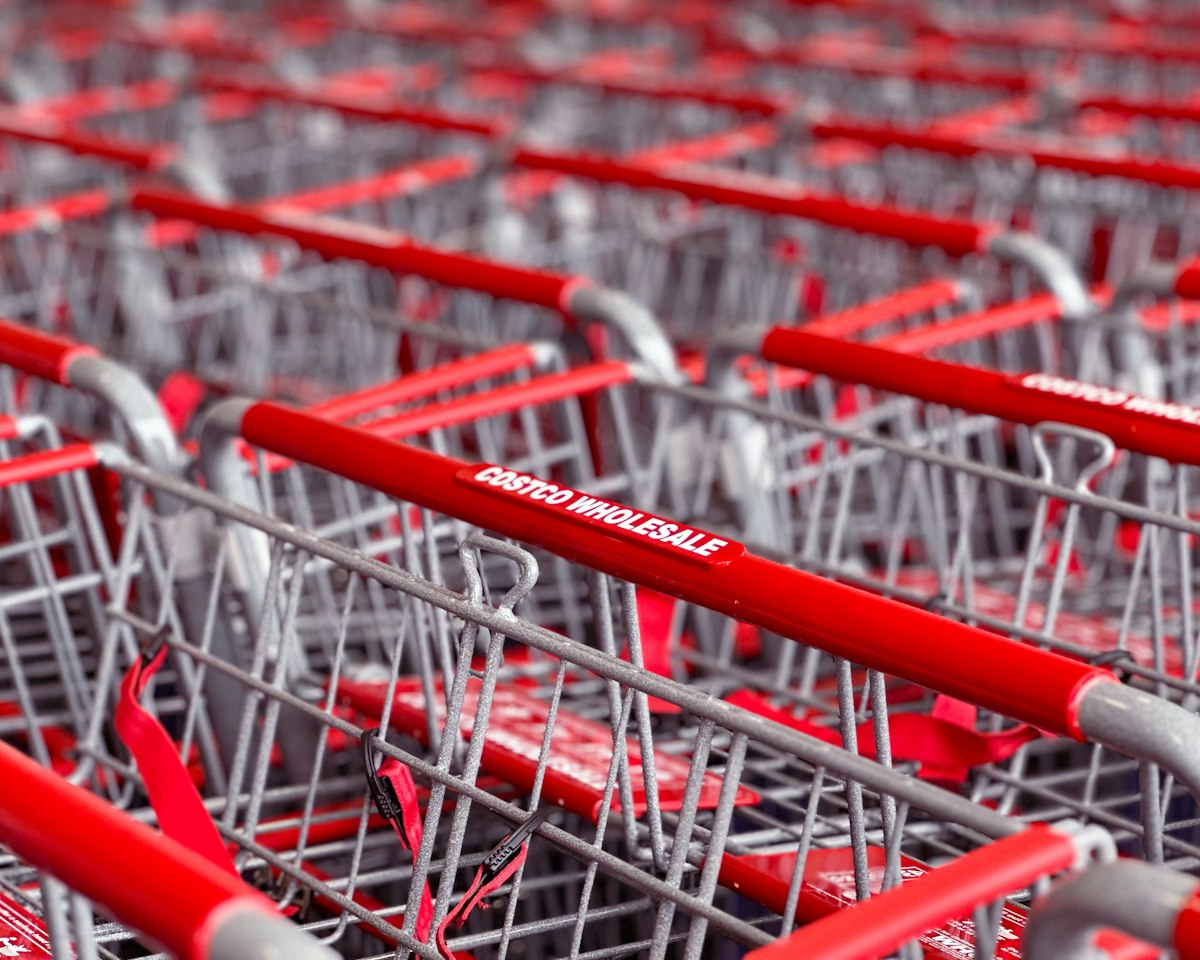
Walk into Costco and everything feels designed to make you spend: giant carts, free samples, 48-packs of granola bars. But here is the twist. Costco makes surprisingly little on the products in your cart. A huge share of its profit comes from the plastic card you show at the entrance.
What Happened
On September 24, Costco reported results for its fiscal fourth quarter, the 16 weeks that ended August 30. Net sales came in around 93.9 billion dollars, up more than 11 percent from a year earlier, and earnings of 6.75 dollars per share beat Wall Street estimates. For the full year, net sales rose about 10 percent to roughly 297 billion dollars, and membership fee income climbed to about 5.9 billion dollars from 5.3 billion. Costco ended the year with 84.1 million paid memberships, including 42.3 million upgraded Executive memberships, and a renewal rate of 92.3 percent in the U.S. and Canada. Digitally enabled sales grew nearly 20 percent, helped by a nationwide expansion onto DoorDash. The stock rose about 3 percent after the report.
Why It Matters
Costco's strategy is to sell products at very thin margins, marking items up only slightly above what it pays. That keeps prices low, which keeps members happy, which keeps them renewing. Membership fees carry very little direct cost, so they add a lot to Costco's bottom line even though they are a small slice of total sales. That is why investors watch the renewal rate more closely than almost any other number.
There are a few things to watch. Growth in paid memberships has been slowing, and Costco has said members who sign up online tend to cancel more often than those who join in a warehouse. Costco also got a one-time boost of 15 cents per share from refunds on tariffs the Supreme Court struck down earlier this year, and it said it reinvested part of that money into lower prices for members.
"Costco makes surprisingly little on what is in your cart. It makes its money on the card you show at the door."
The Concept: The Membership Model
Most stores make money by selling you things for more than they paid. A membership business adds a twist. It charges you a fee up front just for the right to shop, then uses that steady income to keep prices low. Once you have paid, you feel pulled to shop there to get your money's worth, a tendency behavioral economists connect to the sunk cost effect. Executive members pay a higher fee but generally earn about 2 percent back on qualifying purchases, which rewards them for spending even more.
The result is recurring revenue, money that comes back year after year with little extra effort. Investors love recurring revenue because it is far easier to predict than one-time sales. Costco, Amazon Prime and your favorite streaming services all run versions of this same playbook.
Why Teens Should Care
Membership models are everywhere in your life: music and video streaming, gaming passes, gym memberships, even some fast food apps. Understanding the math helps you use them instead of getting used by them. Before you pay for any membership, ask one question: will I actually save or get more than I pay? For a family that buys groceries in bulk, Costco often passes that test. For a subscription you open twice a year, it probably fails.
There is also a lesson here if you ever start a business. Costco proves you do not have to make a big profit on every sale if you can earn loyalty strong enough that about nine out of ten customers pay you again every year.
Costco keeps prices low and earns much of its profit from membership fees that more than 90 percent of North American members renew. Before you pay for any membership, do the math on whether you actually come out ahead.
Want more breakdowns like this?
We break down companies, markets, and money every week — in plain English.
Sources
Costco Q4 FY2026 Form 8-K supplemental (Sept 24, 2026) · Costco Q4 2026 earnings call via Motley Fool · Yahoo Finance (Sept 28, 2026) · Zacks via Yahoo Finance (Sept 28, 2026) · 24/7 Wall St. (Sept 24, 2026) · Primary Ignition (Sept 25, 2026)